
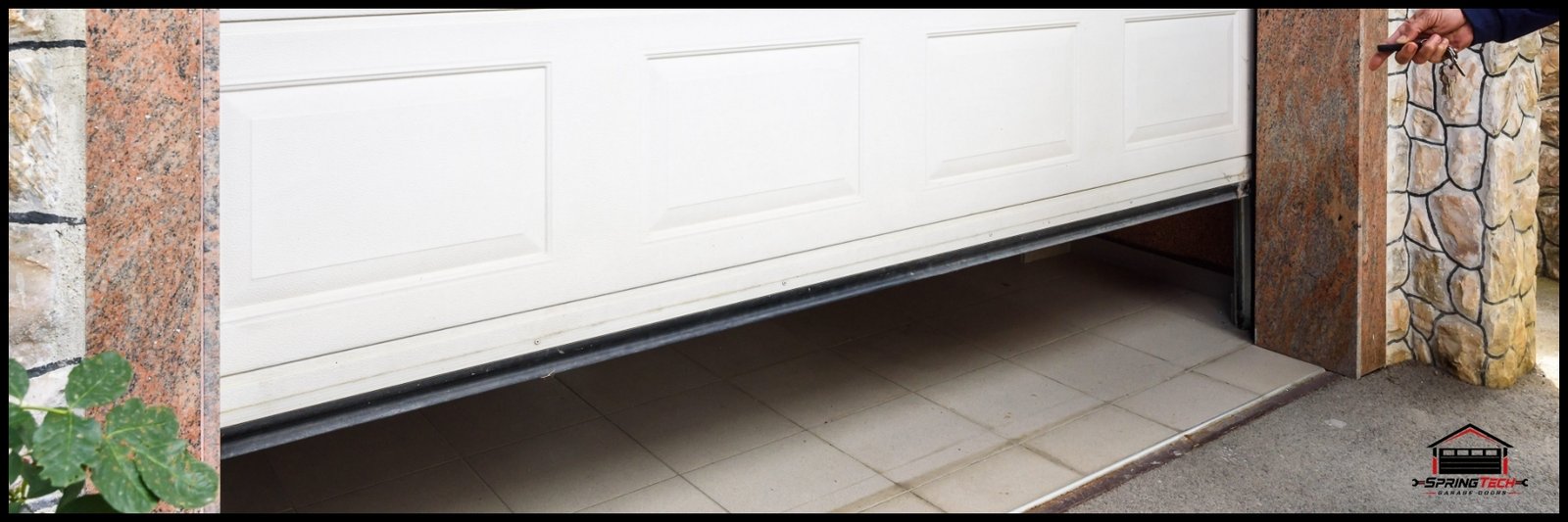
After a Long Winter, Take a Close Look at Your Garage Door Bottom Seal
If you have noticed water pooling just inside your garage door after a spring rain, or spotted dirt and debris tracking in along the floor, your garage door bottom seal may be telling you something. After the kind of winter that Simcoe County and York Region consistently deliver, it is one of the first things worth checking. Barrie averages 157 days a year when overnight temperatures drop to 0°C or below, and that relentless freeze-thaw cycle is one of the most damaging forces a rubber seal can face. By the time May rolls around, what looked like a functional seal in September may have cracked, compressed, or pulled away from the retainer enough to let the elements in.
Understanding why bottom seals fail, what types are available, and when replacement makes sense can save you from water damage, pest intrusion, and a garage floor that never seems to stay clean.
What Does a Garage Door Bottom Seal Actually Do?
The bottom seal is the rubber or vinyl strip that runs along the bottom edge of your garage door and sits flush against the floor when the door is closed. Its job is straightforward: keep water, dirt, debris, insects, and small pests from getting in underneath the door. It also helps the door close more quietly by cushioning the contact between the door and the floor surface.
It sounds simple, and in principle it is. But the bottom seal operates in one of the harshest conditions of any component on the door. It gets compressed every time the door closes, dragged across the ground every time it opens, soaked by rain and snowmelt, frozen solid in cold snaps, and then thawed and refrozen repeatedly through the shoulder seasons. Over time, even a good quality seal cannot withstand that kind of punishment indefinitely.
Why Canadian Winters Are Especially Hard on Bottom Seals
Most garage door components face some degree of seasonal stress, but the bottom seal sits at ground level where the conditions are particularly unforgiving. In Barrie, snowfall days number more than 66 across the year, with the snowpack remaining on the ground for around 101 days annually. That means months of the seal sitting in contact with snow, ice, and the road salt and calcium chloride that gets tracked in from driveways and garages across the region.
Salt and de-icing chemicals are particularly damaging to rubber. They accelerate the breakdown of the material at a molecular level, causing it to dry out, crack, and lose its flexibility much faster than it would in a milder climate. Add in the mechanical stress of the seal freezing to the ground overnight and then being torn free when the door opens in the morning, and it becomes clear why bottom seals in Central Ontario have a shorter effective lifespan than the same seal installed in a warmer part of the country.
“Bottom seals take more abuse than any other part of the door, and most homeowners do not think about them until water is already getting in. In this climate, I always tell people to check their seal in the spring after winter is done, because that is when the damage shows up. By then the freeze-thaw has done its work and you can see the cracking and compression that built up over the cold months.”
Ilan Kuchuk, Founder, Spring Tech Garage Doors
What Are the Different Types of Garage Door Bottom Seals?
Not all garage door bottom seals are the same, and understanding the main types helps you make a more informed decision when it comes time to replace one.
The T-style seal is the most common type found on residential garage doors. It slots into a retainer channel along the bottom of the door and is relatively straightforward to replace. The T-shaped profile creates a flexible barrier that compresses against the floor when the door closes. It is widely available and works well on flat, even garage floors.
The bulb seal features a rounded profile that compresses more dramatically than a T-style seal, making it a good choice for floors that are slightly uneven. The larger contact area can provide a tighter barrier against water and drafts, and the rounded shape tends to handle freeze-thaw stress reasonably well.
The beaded seal, sometimes called a bead-on-bead seal, uses a double-bead profile that locks into a retainer channel from both sides. It is a durable and secure option that is less likely to shift or pull out of the retainer over time.
Brush seals use bristles rather than rubber or vinyl and are more commonly found on commercial garage doors, though they occasionally appear in residential applications. They are particularly effective at keeping out fine debris and pests but offer less protection against water than a rubber seal.
For most homeowners in Simcoe County and York Region, a quality T-style or bulb seal made from durable rubber rather than vinyl is the most practical and cost-effective choice. Rubber handles cold temperatures better than vinyl, retaining flexibility further into the cold range before becoming brittle.
“The material matters more than most people realize. Vinyl seals are cheaper upfront but they get rigid in the cold and start cracking faster. A good rubber seal costs a bit more, but it holds up through a Central Ontario winter much better. When we do a replacement, that is always the conversation I want to have with the homeowner before we talk about anything else.”
Ilan Kuchuk, Founder, Spring Tech Garage Doors
How Do You Know When It Is Time to Replace Your Bottom Seal?
There are a few clear signs that your garage door bottom seal has reached the end of its useful life. Water tracking in along the floor after rain or snowmelt is the most obvious indicator. Light visible under the door when it is fully closed is another. If you can see daylight along any section of the bottom edge, air, water, and pests can get through the same gap.
Run your hand along the length of the seal and feel for sections that have hardened, cracked, or flattened permanently. A seal that no longer springs back when compressed has lost its ability to form a proper barrier. Look for sections that have pulled away from the retainer channel or torn at the edges. Even if the damage looks minor, a compromised seal is not doing its job.
After a Simcoe County or York Region winter, any of these signs are common and worth addressing before the wet spring and summer months arrive.
Can You Replace a Garage Door Bottom Seal Yourself?
For handy homeowners, a basic T-style seal replacement on a standard residential door is a manageable DIY task. The general process involves removing the old seal from the retainer channel, cleaning the channel thoroughly, sliding the new seal into place from one end, and trimming it to length. The retainer channel itself is typically held in place by screws along the bottom of the door panel.
The process sounds simple enough, but there are a few things that catch homeowners out. Getting the seal aligned properly so that it sits flush across the full width of the door requires patience, particularly on older doors where the bottom panel may not be perfectly level. Choosing the wrong seal profile for your retainer channel means the seal will not lock in properly and will pull free under use. And if the retainer channel itself is bent, corroded, or damaged, replacing the seal alone will not solve the problem.
“I always say there is no shame in trying it yourself if it is a straightforward T-style swap on a flat floor. But the calls I get most often are from people who bought the wrong seal, got it halfway in, and then could not get it to sit right. Having someone come out and do it properly the first time is usually faster and cheaper than a second attempt after a failed DIY. And if the retainer is damaged, that is definitely a job for a technician.”
Ilan Kuchuk, Founder, Spring Tech Garage Doors
Why Professional Garage Door Bottom Seal Replacement Is Worth Considering
A professional garage door bottom seal replacement is a fast, affordable service that takes the guesswork out of the process. A technician will assess the condition of the existing seal and retainer channel, recommend the right seal type and material for your door and floor surface, and install it correctly so that it sits flush, locks securely into the retainer, and provides a clean, tight barrier across the full width of the door.
If the retainer channel is damaged or the bottom panel of the door has taken a hit over the years, a technician can address those issues at the same time rather than leaving underlying problems that will shorten the lifespan of the new seal.
For most homeowners, the combination of correct material selection, proper fit, and the peace of mind of knowing the job has been done right makes professional replacement the smarter choice, particularly when the cost of the service is modest relative to the protection it provides.
Spring Tech Garage Doors provides professional garage door bottom seal replacement for homeowners across Barrie, Innisfil, Bradford, Newmarket, Richmond Hill, Nobleton, Angus, Alliston, Orillia, Tiny, and Wasaga Beach. If your seal is showing signs of wear after this past winter, now is the right time to get it sorted before the spring rains arrive in full.