
How Are Garage Door Springs Actually Measured for Lifespan?
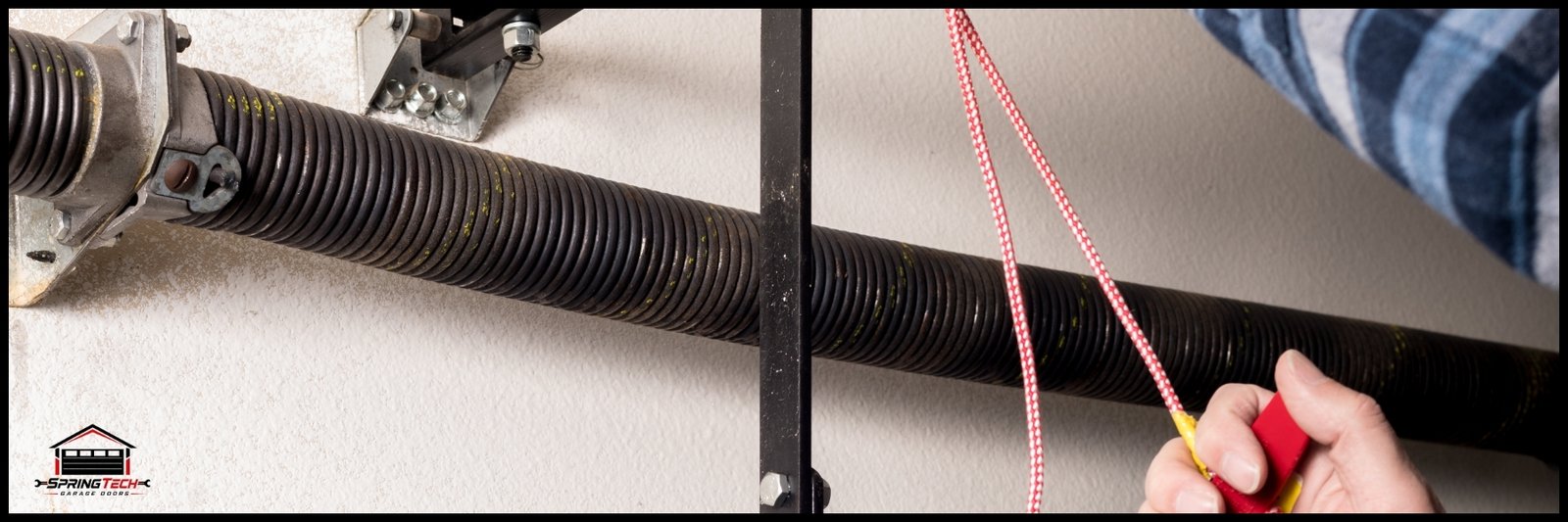
When professionals talk about how long a garage door spring lasts, the measurement that matters is not years — it is cycles. One cycle is one complete open-and-close operation of the garage door. Every time the door opens, the spring either twists or stretches to store and release energy that counterbalances the door’s weight. Each cycle uses up a small fraction of the spring’s mechanical life.
Standard residential torsion springs are typically rated for 10,000 cycles. High-cycle torsion springs are available at 25,000, 50,000, and even 80,000 cycles for premium applications. Standard extension springs, which are more common on older homes, also rate around 5,000 to 10,000 cycles but tend to wear faster due to the constant stretching and contracting force they experience.
The translation to years depends entirely on how often you use your garage door. A household that opens and closes the door four times a day accumulates approximately 1,460 cycles per year. At that rate, a 10,000-cycle standard torsion spring reaches its rated life in roughly seven years. A household with two drivers using the garage as the primary entry point might cycle the door six to eight times daily, reaching the same threshold in five years or less.
The cycle rating is the honest way to think about spring lifespan, because it removes the guesswork about years. If you know how many times a day you use the door and what rating your spring has, you can do the math. For most households in this area, I tell people to expect somewhere between seven and twelve years on a standard spring — but that is a starting point, not a guarantee, because the climate here adds its own variables.
Ilan Kuchuk, Founder, Spring Tech Garage Doors
What Does Central Ontario’s Climate Do to Spring Lifespan?
The cycle rating is a laboratory measurement made under controlled conditions. In Simcoe County and York Region, real-world spring lifespan is affected by several additional factors that laboratory testing does not fully capture.
Temperature cycling is the biggest one. In Barrie, temperatures range from well above 30°C in summer to -25°C or below in the coldest weeks of winter. Metal springs expand and contract with temperature, and that thermal movement accelerates metal fatigue over time — the same principle that causes metal to eventually crack if you bend it back and forth repeatedly. A spring that has experienced 20-plus years of freeze-thaw cycling in Central Ontario has been subjected to mechanical stress that its cycle rating does not account for.
Road salt and moisture compound the issue. Salt tracked into garages on vehicles and footwear attacks the surface of the spring, creating corrosion that weakens the metal from the outside. Lakeshore properties near Lake Simcoe or Georgian Bay experience elevated ambient moisture year-round, which accelerates rust formation on springs that are not regularly lubricated. A corroded spring will fail earlier than its cycle rating suggests — sometimes significantly earlier.
Do Torsion Springs Last Longer Than Extension Springs?
Yes, consistently. Torsion springs distribute mechanical stress more evenly than extension springs because the twisting force is spread along the length of the spring on a shaft, rather than concentrating stress at the attachment points as extension springs do. Torsion springs also have fewer failure points overall.
Extension springs, which run along the horizontal tracks on both sides of the door, experience a pulling force that concentrates at the hook ends. Over time, these hooks can deform or crack, particularly in cold weather when the metal is less flexible. If your home has extension springs and they have never been replaced, they should be inspected carefully — particularly if the home was built before the late 1990s, when extension springs were far more common than they are today.
One important safety note: extension springs should always have safety cables running through them. If a spring breaks, the safety cable prevents the spring from whipping across the garage at high speed. If your extension springs do not have safety cables, this is worth addressing immediately as part of any professional spring replacement service.
I recommend torsion springs whenever someone is replacing extension springs and the door is compatible. The lifespan is longer, the operation is smoother, and the safety profile is better. It is usually worth the modest additional cost at the time of replacement, particularly in a climate like ours where extension springs tend to show wear faster.
Ilan Kuchuk, Founder, Spring Tech Garage Doors
When Should You Plan for Spring Replacement?
The honest answer is before the spring fails, not after. A broken spring is an emergency — it renders the door inoperable, can cause damage to cables, tracks, and the opener, and typically requires a same-day service call. A planned replacement, scheduled when you know the springs are nearing end of life, is almost always less expensive and far less disruptive.
The practical trigger for planning a replacement is a combination of age and symptoms. If your springs are 7 to 10 years old and you are noticing early warning signs — a door that feels heavier than before, an opener that sounds like it is working harder, slight unevenness in how the door moves — it is time to have a professional assess the springs and advise on replacement timing.
For homes built during the early 2000s growth waves in Barrie, Bradford, Innisfil, and Newmarket, original springs are now approaching 20 to 25 years of age. These springs have exceeded their expected service life and should be considered for proactive replacement regardless of whether visible symptoms have appeared yet.
The best time to replace springs is when you have planned for it and can choose the timing. The worst time is when one snaps on a January morning and your car is stuck inside the garage. I always encourage homeowners to get a spring assessment when their system is around seven to ten years old, because that is when the math on replacement starts to make more sense than waiting.
Ilan Kuchuk, Founder, Spring Tech Garage Doors
Does Replacing Springs Also Affect Other Components?
Spring replacement is a good opportunity to assess the health of the cables, rollers, and opener at the same time. These components operate as a system, and springs that have been struggling for months put extra wear on cables and the opener motor. A professional technician replacing springs will check cable condition, roller wear, and opener force settings as part of the process.
If both springs in a two-spring system are being replaced, this is also an ideal time to consider upgrading to high-cycle springs. For a household that uses the garage four to six times a day, the investment in a 25,000-cycle spring extends the replacement interval from roughly seven years to over fifteen. A professional garage door maintenance assessment can help you understand the state of all components and make an informed decision about what to replace now versus what to monitor going forward.
Spring Tech Garage Doors provides professional spring inspection, repair, and replacement for homeowners across Barrie, Innisfil, Bradford, Newmarket, Richmond Hill, Nobleton, Angus, Alliston, Orillia, Tiny, and Wasaga Beach. Contact us to schedule an assessment.