Why Is Lubricating a Garage Door So Important?
Garage door components generate friction with every single cycle. Rollers roll through tracks, hinges pivot at each panel joint, springs twist and unwind, cables run over pulleys, and the torsion bar turns in its bearing plates — all of this mechanical movement creates heat and wear that shortens the service life of every component involved. Lubrication reduces that friction, keeps components operating quietly and smoothly, and slows the wear that eventually leads to failure.
In Simcoe County and York Region, lubrication is particularly important because of what the climate does to lubricant effectiveness. At -20°C — temperatures that Barrie, Angus, and Alliston see multiple times each winter — standard lubricants can become viscous and lose effectiveness. A garage door that was lubricated in October with the wrong product may be operating on dry components by January. Choosing the right lubricant and applying it at the right times of year is as important as the act of lubricating itself.
Lubrication is the single most impactful thing a homeowner can do between professional service visits. It is inexpensive, it takes fifteen minutes, and the difference it makes in how the door sounds and operates is immediate. The doors we see that have been regularly lubricated consistently look better and wear more slowly than those that have not. It is genuinely worth making a habit of.
Ilan Kuchuk, Founder, Spring Tech Garage Doors
What Lubricant Should You Actually Use?
The most important thing to know before you start is what NOT to use. WD-40 is not a lubricant — it is primarily a water displacement and cleaning solvent that will temporarily reduce squeaking but will dry out quickly and can attract dust and grime that accelerates wear. Using WD-40 on garage door components is one of the most common mistakes homeowners make.
The correct product is a dedicated garage door lubricant or a white lithium grease spray. These products are formulated specifically for metal-on-metal contact at a range of temperatures and remain effective through the cold extremes that Central Ontario winters produce. Silicone spray is another acceptable option for certain components, particularly nylon rollers and rubber seals, where petroleum-based products can cause degradation over time.
For homeowners in Simcoe County and York Region, look specifically for a lubricant rated for cold-weather performance down to -40°C. This is a small detail that makes a meaningful difference in how the door performs on the coldest mornings of the year.
Which Components Should You Lubricate?
The torsion springs are the first and most important stop. Apply lubricant to the full length of the spring coil, working it into the gaps between the coils. This both lubricates the spring and provides a layer of protection against rust and corrosion — particularly important in lakeshore communities near Lake Simcoe or Georgian Bay where moisture accelerates spring corrosion.
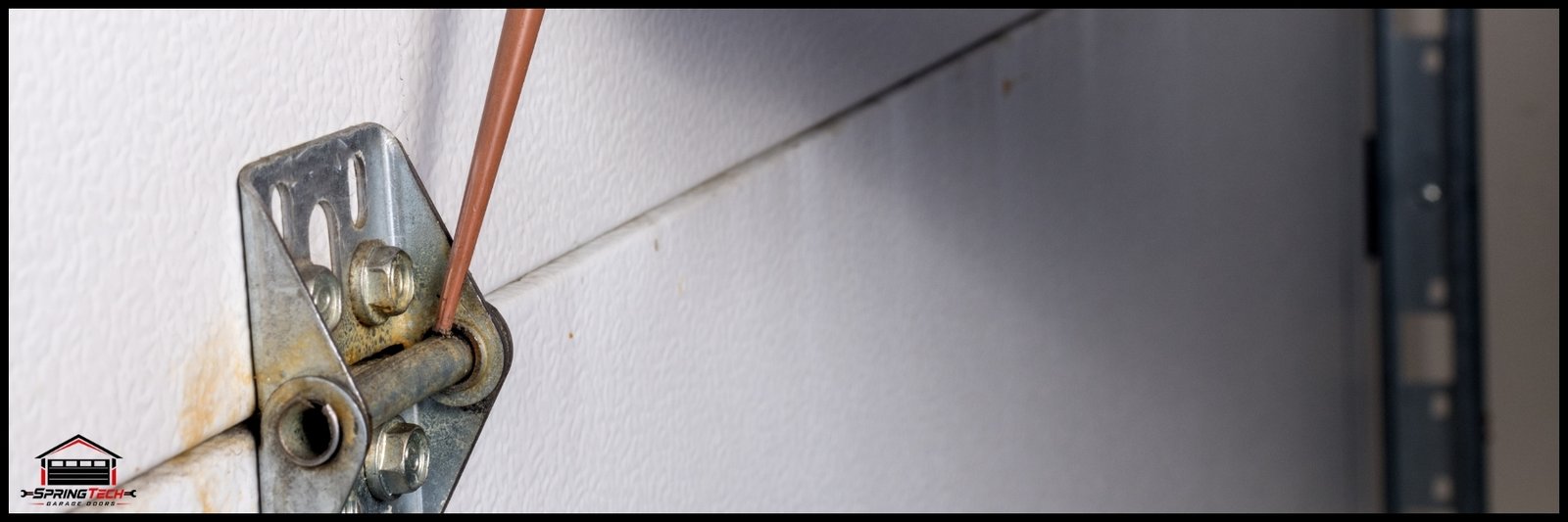
The hinges that connect each panel of the door should be lubricated at the pivot point where the hinge pin sits. Apply a small amount of lubricant to each hinge, working the door through a full cycle to let it distribute through the pivot. The rollers are one of the most important lubrication points — for steel rollers, apply lubricant to the bearing surface where the roller contacts the track. For nylon rollers, apply sparingly to the bearing only, not the nylon surface, as over-lubricating nylon rollers causes grime to accumulate on the track.
The torsion bar and the bearing plates at each end should be lubricated wherever metal contacts metal. The cable drums benefit from a light coat as well. The lock mechanism on manually locking doors should receive a small amount of lubricant to keep it operating smoothly.
The components most people miss are the hinges and the bearing plates. Everyone thinks about the rollers and the springs, but the hinges are cycling just as much and they dry out just as fast. Bearing plates at the ends of the torsion bar are another one — they carry the full weight of the spring system and they need lubrication to do that quietly and without wear.
Ilan Kuchuk, Founder, Spring Tech Garage Doors
What Should You NOT Lubricate?
The tracks should not be lubricated. This is a common mistake. The tracks provide a running surface for the rollers, and a lubricated track causes rollers to slip rather than roll, which can cause the door to come off track. Clean the tracks with a damp cloth to remove grit and debris, but do not apply lubricant to the track interior.
The bottom seal and weatherstripping should not be lubricated with petroleum-based products, which can degrade rubber over time. If a rubber seal is squeaking against the floor or frame, it needs replacement rather than lubrication. A seal that has dried out enough to squeak is also not sealing effectively. Bottom seal replacement is an inexpensive service that restores the seal’s function and eliminates the noise.
Belt drive rails should never be lubricated. Chain drive chains require periodic lubrication with a manufacturer-specified product — check the owner’s manual for the correct product and interval.
When Should You Lubricate and How Often?
In Simcoe County and York Region, the optimal lubrication schedule is twice a year: once in late October or early November before sustained cold temperatures arrive, and once in April after winter has passed. The fall lubrication is the more important of the two — it is what carries the door through the most demanding season. Using a cold-weather-rated lubricant at this point ensures the product remains effective through January and February.
The spring lubrication refreshes the product after months of cold exposure and clears out any moisture that has accumulated over the winter. It is also a good opportunity to do a visual inspection — checking springs, cables, seals, and hardware for any signs of wear that developed through the winter and may need professional attention.
The fall lubrication is the one I would never skip. If you only do it once a year, do it in October. That is what gets the door through the winter in good shape. The spring lubrication is a refresh and a chance to look at what the cold has done to the components. Together, they cover 95 per cent of what lubrication can do for the system.
Ilan Kuchuk, Founder, Spring Tech Garage Doors
When Is Lubrication Not Enough?
Lubrication addresses friction and corrosion prevention — it does not fix worn components. A roller that has developed a flat spot will still drag even if it is well-lubricated. A spring that has lost tension will not regain it from lubrication. A hinge that has cracked or a bracket that has bent needs replacement, not lubrication.
If you lubricate the door and the noise or performance issue persists, or returns quickly after lubrication, the underlying component needs professional assessment. Spring Tech Garage Doors provides professional tune-up and maintenance services across Simcoe County and York Region, including a full lubrication service as part of each annual maintenance visit.