
What Counts as an Emergency Garage Door Repair?
Not every garage door problem requires emergency service. A door that squeaks more than usual, moves slowly, or has a remote losing range is a maintenance issue that can be scheduled. A garage door emergency is a situation in which the door is inoperable in a way that poses a security risk, leaves a vehicle inaccessible, or presents a safety hazard.
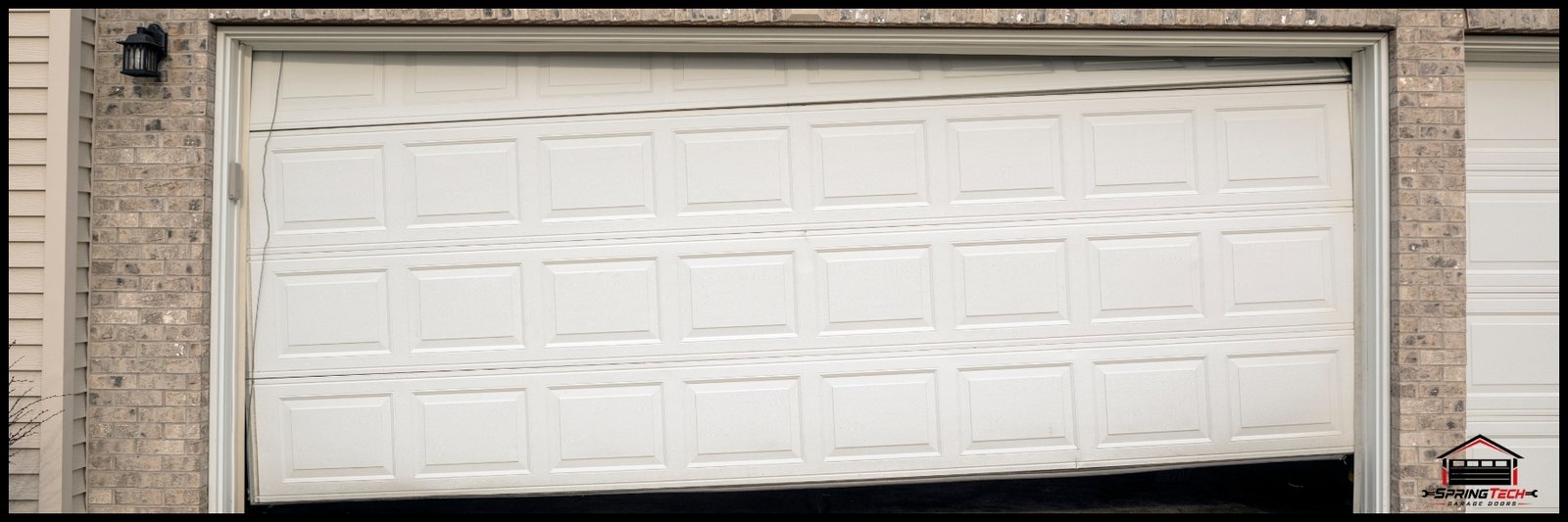
The most common garage door emergencies in Simcoe County include: a torsion spring that has snapped; a cable that has broken or slipped off the drum; a door that has come off its tracks; a door that will not close and cannot be secured; and an opener that has failed with a vehicle trapped inside and no manual override accessible. All of these situations require professional service rather than homeowner intervention.
The most important thing I can say about a garage door emergency is do not force it. A door with a broken spring, a snapped cable, or a track problem should not be operated manually. The risk of the door dropping suddenly or a component releasing unexpectedly is real. Call for service and wait. The inconvenience of waiting is considerably better than the alternative.
Ilan Kuchuk, Founder, Spring Tech Garage Doors
What Should You Do Immediately When a Garage Door Emergency Happens?
Disconnect the opener if the door is in a partially open or closed position. Pull the red emergency release cord to disengage the opener trolley from the door. Do not attempt to open or close the door manually if you suspect a spring or cable failure. The weight of the door without functioning counterbalance is significant — a double-wide steel door can weigh 200 to 350 pounds — and a door that drops suddenly while being moved can cause serious injury.
If the door is stuck in the open position, do not leave the garage unsecured. If the door is stuck in the closed position and a vehicle is inside, most modern openers have emergency battery backup or an emergency release that allows manual operation. If there is any doubt about whether it is safe to operate the door manually, call for service and wait.
What Should You NOT Do During a Garage Door Emergency?
Do not attempt to repair springs yourself. A spring under tension that releases unexpectedly can cause severe injury. Emergency spring repair is not a situation where improvised tools or a tutorial video is an adequate substitute for professional training.
Do not continue to operate a door that has come off its tracks. An off-track door is structurally compromised, and operating it with an opener can cause the door to jam, the panels to buckle, or the door to drop. Disengage the opener and leave the door in place until a technician arrives.
We get calls from homeowners who have already tried to fix the problem themselves and made it worse. A broken spring attempted with the wrong tools, a cable reattachment that was not properly tensioned, a track that was bent further trying to force the door back onto it. In an emergency, the best thing most homeowners can do is stop, secure what can be secured safely, and call someone who can handle it correctly.
Ilan Kuchuk, Founder, Spring Tech Garage Doors
How Quickly Can You Get Emergency Garage Door Repair in Simcoe County?
Response time for emergency garage door repair varies significantly depending on who you call. A genuinely local company with technicians on the road in the region can typically respond to an emergency call within a few hours — often the same day. Larger franchise operations that dispatch from regional hubs may quote same-day service but operate on a longer actual response window, particularly during busy periods when multiple service calls are happening simultaneously.
Spring Tech Garage Doors provides emergency garage door repair across Barrie, Innisfil, Bradford, Newmarket, Richmond Hill, Nobleton, Angus, Alliston, Orillia, Tiny, and Wasaga Beach. We aim to respond to emergency calls the same day, with priority given to situations where the door cannot be secured.
What Are the Most Common Emergency Repair Scenarios in Central Ontario?
Spring failure in cold weather is the most seasonal emergency in Simcoe County. Torsion springs that are already near end of life are particularly vulnerable to failure during the first sustained cold snap of the season, when the metal contracts and the fatigue that has been building through thousands of cycles reaches a critical point. January mornings regularly produce a wave of spring failure calls across the region.
Ice-related door jamming is another winter-specific scenario. A door that sat closed overnight when temperatures dropped below -10°C may have the bottom seal frozen to the concrete floor. Forcing the door open tears the seal and can damage the bottom panel. If your door will not open after a cold night, check whether the bottom seal is frozen to the floor before assuming a mechanical failure — pouring warm water along the bottom edge and waiting five minutes often resolves this without a service call.
Cable failures following prolonged cold exposure are common in February and March as freeze-thaw cycling accelerates corrosion that has been building through the winter. A corroded cable that has been operating normally may snap during a routine open or close cycle. This is why visual inspection of cables through the winter months is a habit worth developing. Professional cable repair is available across Simcoe County from Spring Tech Garage Doors.
January is the busiest month for emergency calls. Springs that were borderline through the fall suddenly fail when the first real cold snap hits in January. We prepare for it every year and we do our best to respond to every call as quickly as possible. The most important thing homeowners can do is get their springs inspected in the fall so we are not dealing with a January emergency that a September tune-up would have prevented.
Ilan Kuchuk, Founder, Spring Tech Garage Doors