
What Is Garage Door Insulation and How Is It Measured?
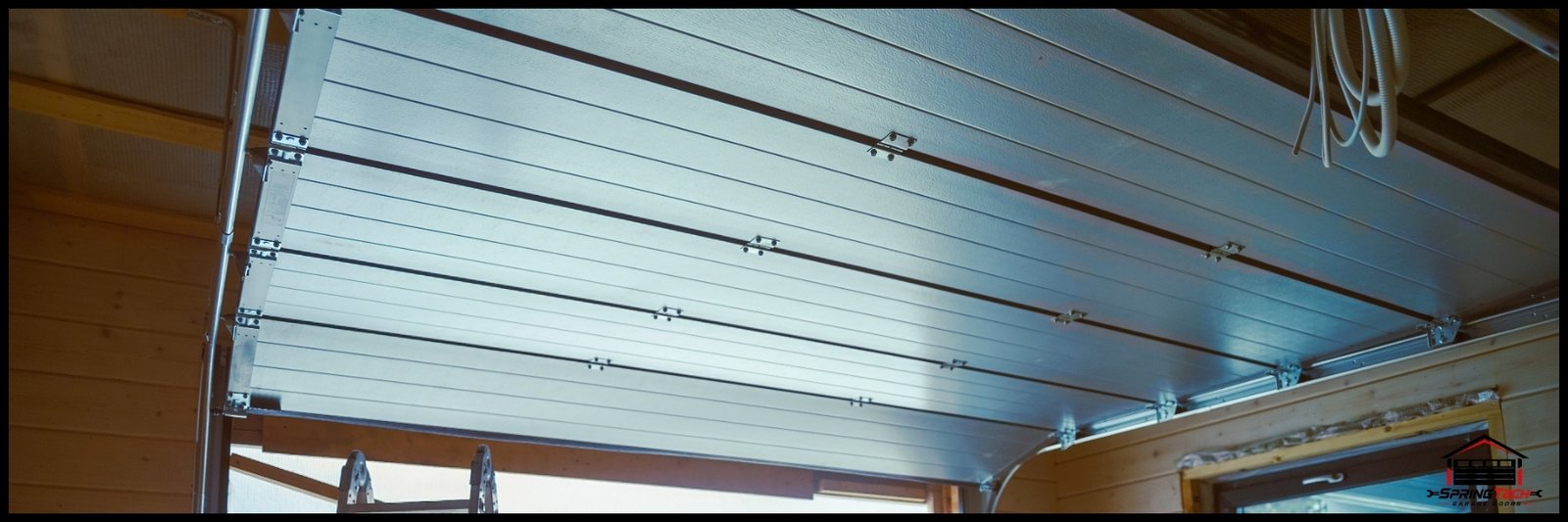
Garage door insulation is a layer of insulating material — most commonly rigid polystyrene foam or injected polyurethane foam — incorporated into the door panel structure. Its effectiveness is measured by R-value, which quantifies how well a material resists heat transfer. The higher the R-value, the better the material prevents heat from moving through the door in either direction.
Garage doors are available across a wide range of insulation ratings. Single-layer steel doors with no insulation have an R-value near zero. Double-layer doors with a polystyrene insert typically achieve R-6 to R-9. Triple-layer doors with injected polyurethane foam — the premium option — achieve R-10 to R-18 or higher. Natural Resources Canada’s guidance on home insulation specifically identifies attached garages as critical areas requiring proper thermal barriers to reduce heat loss and prevent garage fumes from entering living spaces.
The type of insulation material also matters beyond just R-value. Polystyrene is a rigid foam board sandwiched between steel panels — effective and cost-efficient. Polyurethane foam is injected and expands to fill the entire panel cavity, bonding to the steel and creating a denser, more structurally rigid panel with superior R-value for the same panel thickness. Polyurethane doors are stiffer, quieter, and better performing thermally than polystyrene at equivalent thicknesses.
The R-value conversation matters most for attached garages. If the garage is part of your home’s thermal envelope — sharing walls with living spaces, with a door into the house — then what happens to the temperature in the garage affects the temperature and the heating costs inside the house. An uninsulated door in that situation is a significant gap in the thermal barrier.
Ilan Kuchuk, Founder, Spring Tech Garage Doors
Does Central Ontario’s Climate Make Insulation More Worthwhile?
Unambiguously yes, particularly for attached garages. Barrie averages more than 157 days per year when overnight temperatures drop to 0°C or below, with January lows regularly reaching -15°C to -25°C. An uninsulated garage door in that climate is essentially an opening in the building envelope the size of the door — a significant thermal liability for any garage that shares walls or a floor with heated living space.
The practical effects of poor garage door insulation in Central Ontario include: cold air infiltration into the garage that stresses vehicles and stored equipment; heat loss from adjacent living spaces when the thermal boundary between the garage and the house is inadequately maintained; moisture condensation on cold interior surfaces that can damage stored items and create corrosion conditions for door hardware; and the direct energy cost of heating the home against the thermal deficit that an uninsulated door creates.
For homeowners who use their attached garage as a workshop, home gym, or any purpose beyond vehicle storage, the temperature difference between an uninsulated and a well-insulated door is immediately tangible. A garage with an R-13 to R-15 door system can maintain temperatures within 10 to 15 degrees of the adjacent home interior — a workable environment for most activities. A garage with no insulation in a Barrie January can be -15°C or colder, limiting its usefulness entirely.
Is It Worth Insulating the Garage Door If the Rest of the Garage Is Not?
This is one of the most common questions that comes up during a new installation, and the answer is almost always yes — even if the walls, ceiling, and floor of the garage are uninsulated.
The reason comes down to where the thermal weakness actually is. Most garages are framed with solid wood studs and sheathing that provide at least some resistance to heat transfer, even without added insulation. The garage door, by contrast, is a large panel of thin steel with nothing behind it — essentially a hole in the building envelope the size of the entire opening. In a Simcoe County winter, that uninsulated door is by far the weakest point in the structure, regardless of what the walls are doing.
Adding an insulated door does not turn an uninsulated garage into a warm space, and it is worth being honest about that. But it does meaningfully reduce cold air infiltration, moderate temperature swings inside the garage, and take pressure off any adjacent heated living space that shares a wall with the garage. The door is the lowest-hanging fruit in the thermal performance of the structure — addressing it first makes sense even before anything else is upgraded.
Most garages are actually better protected than people give them credit for — the framing and sheathing do some work even without insulation in the walls. The door is the weak link. A single layer of uninsulated steel across a sixteen-foot opening is where the cold gets in. Adding insulation to the door does not solve everything, but it solves the biggest thing, and it costs very little extra when you are already doing a new installation.
Ilan Kuchuk, Founder, Spring Tech Garage Doors
Does Insulation Matter for Detached Garages?
For detached garages that are not connected to the home’s thermal envelope and are not used as heated workspace, the case for premium door insulation is weaker. A detached garage used purely for vehicle storage will be cold in winter regardless of door insulation — the building envelope is not sealed or heated, and the door is only one of many pathways for heat loss. A basic insulation level of R-6 to R-9 is reasonable for these situations.
However, even detached garages benefit from some insulation for non-thermal reasons. Insulated doors are structurally more rigid than uninsulated doors — the foam core adds stiffness that helps the door resist warping and denting under impact. Insulated doors are also meaningfully quieter, as the foam absorbs vibration from the door’s operation. And for garages in lakeshore communities near Georgian Bay or Lake Simcoe, some insulation helps regulate humidity inside the garage, reducing condensation on stored items and on the door hardware itself.
Detached garage or attached — the insulation question always comes back to how the space is used. If it is a workshop or a home gym, insulation makes a real practical difference in how comfortable the space is through a Central Ontario winter. If it is pure vehicle storage with no plans to use the space otherwise, basic insulation is fine and premium is probably overkill.
Ilan Kuchuk, Founder, Spring Tech Garage Doors
What Are the Non-Thermal Benefits of an Insulated Door?
Structural rigidity is one of the most underappreciated benefits. A triple-layer polyurethane door is significantly more resistant to denting from minor impacts than a single or double-layer door — in households with young children, active driveways, or simply the everyday contact that occurs around a busy garage entrance, this durability difference shows up over time in fewer cosmetic issues and a better-looking door through the years.
Noise reduction matters particularly for attached garages. An insulated door absorbs the sound of rain on the door surface, muffles the noise of door operation, and reduces sound transmission from the street into the garage and from the garage into the home. For homeowners whose garage is adjacent to a bedroom or main living area, this acoustic benefit is genuinely noticeable.
Insulated doors also handle temperature extremes better as a mechanical object. The steel skins of an insulated door expand and contract less dramatically across the temperature range of a Simcoe County year because the insulation moderates the temperature of the steel itself. This translates to less panel warping, better seal integrity, and a door that continues to look and function well for longer.
How Do You Choose the Right Insulation Level?
For attached garages in Simcoe County and York Region, R-10 or higher is the recommended starting point. If the garage shares a wall with a bedroom, a home office, or a main living area, R-13 to R-16 is worth the additional investment. For detached garages used for vehicle storage only, R-6 to R-9 is adequate. For detached garages used as workshop or heated workspace, treat the insulation level more like an attached garage — R-10 or higher will make the space meaningfully more comfortable to heat.
For attached garages in this climate, I consistently recommend the best insulation the budget allows. You are going to own the door for 20 to 30 years. The difference in energy performance and comfort between an R-9 and an R-16 door is real over that period, and the cost difference in the door is not large when you spread it over the ownership period. It is one of those decisions that looks different when you think about it over the full life of the door.
Ilan Kuchuk, Founder, Spring Tech Garage Doors
Does Insulation Affect Door Maintenance Needs?
Yes, in one important way. Insulated doors are heavier than uninsulated doors of the same size, which means the spring system needs to be correctly sized for the door’s weight. A spring that was correctly tensioned for an uninsulated door may be under-tensioned if a heavier insulated door is installed without adjusting or replacing the springs. Professional installation of an insulated door should always include a spring tension assessment and adjustment for the new door weight.
Spring Tech Garage Doors provides complete garage door installation and professional garage door maintenance across Barrie, Innisfil, Bradford, Newmarket, Richmond Hill, Nobleton, Angus, Alliston, Orillia, Tiny, and Wasaga Beach. If you are considering a new insulated door or want to assess the insulation level of your existing door, contact us to discuss the options for your specific garage configuration.