Your garage door works hard every single day. Open, close, open, close — through rain, ice, snow squalls, and everything a Simcoe County or York Region winter can throw at it. Most of the time, it just works, which is exactly why it is easy to ignore the early warning signs that something is starting to go wrong.
But catching a problem early almost always means a simpler, less expensive fix. Ignoring it usually means the opposite. Here are 8 signs your garage door needs repair before a minor issue becomes a major one.
1. Unusual Noises That Were Not There Before
A well-maintained garage door should operate with minimal noise. If yours has started grinding, squeaking, rattling, or banging, something has changed. Grinding sounds often point to worn rollers or a lack of lubrication on the tracks. Squeaking can indicate dry hinges or springs that need attention. A banging sound during operation is worth taking seriously as it can signal a loose panel, an imbalanced door, or a spring that is close to snapping.
None of these sounds are normal, and none of them go away on their own. The sooner noisy garage doors are diagnosed, the simpler the fix tends to be.
2. Slow or Uneven Movement
A garage door that hesitates, jerks, or moves unevenly as it opens or closes is telling you something is off. The most common culprits are track alignment issues, worn rollers, or a door that has gone out of balance. In colder months, this can also be caused by components that have contracted in the cold or lubricants that have thickened and are no longer doing their job.
Uneven movement puts extra stress on the opener motor and the springs, accelerating wear across the entire system. If you note slow or uneven movement, it is worth having a technician take a look at your garage door system before the problem compounds.
3. The Door Does Not Open or Close Fully
A garage door that stops partway, reverses unexpectedly, or refuses to close completely is both inconvenient and a security risk. This issue has several potential causes: misaligned safety sensors, a track obstruction, worn cables, or limit settings on the opener that have drifted out of adjustment.
In winter, ice or packed snow along the bottom of the door frame can also interfere with the door’s ability to close fully and trigger the auto-reverse function. If this is happening repeatedly, it is not something to work around — it needs to be properly diagnosed and fixed.
“A door that will not close all the way is one of the most common calls we get, especially in winter. Sometimes it is ice or debris along the track, sometimes it is the sensors, sometimes it is the opener settings. It is usually a straightforward fix, but you do want to get it sorted quickly. A door that will not close is a door that is not securing your home.”
Ilan Kuchuk, Founder, Spring Tech Garage Doors
4. Sagging Sections or Visible Damage
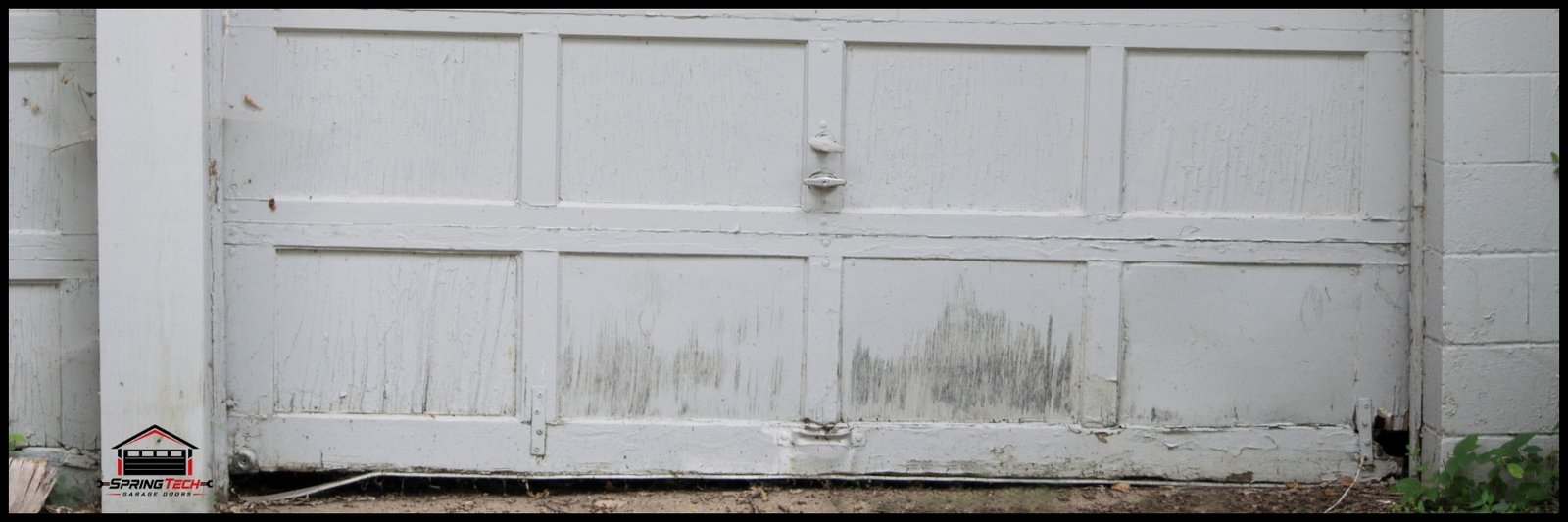
Take a moment to look at your garage door while it is closed. Does it hang evenly? Are there sections that appear to bow outward or sag? Visible dents, cracks, or warping are more than cosmetic concerns. They can affect the structural integrity of the door, compromise the seal along the frame, and put uneven stress on the hardware.
In our Central Ontario climate, the freeze-thaw cycle accelerates this kind of damage. Water works its way into small cracks, freezes, expands, and opens them further. A damaged garage door panel might look minor in October can become a real problem by March.
5. The Door Feels Heavy or the Springs Look Worn
Try this simple test: disconnect the opener and manually lift your garage door to about waist height, then let go. A properly balanced door should stay in place or move only slightly. If it falls quickly, the springs are not doing their job.
Garage door springs carry the full weight of the door and are under enormous tension. In Barrie alone, temperatures can drop below -20°C on the coldest winter nights, and that kind of cold causes metal springs to contract and become brittle over time, making them significantly more likely to snap. A broken spring renders the door inoperable and can cause serious damage to surrounding components if it lets go suddenly. If your door feels heavier than it used to, or if you can see visible gaps, corrosion, or uneven coiling in the springs, call a technician before they fail completely.
6. Damaged or Fraying Cables
Garage door cables work in tandem with the springs to lift and lower the door safely. When a cable frays, slips off its drum, or snaps, the door can drop suddenly on one side or stop working altogether. You may notice the door hanging at an angle, or see loose cable coiled on the floor of the garage.
Like springs, cables are under significant tension and should only be inspected and replaced by a trained technician. Do not attempt to adjust or repair garage door cables yourself.
“Springs and cables are the two components I would flag most urgently. They are under a lot of tension and they take a real beating through a Central Ontario winter. If something looks off, like the door feels heavy, you can see fraying, or the door is hanging unevenly, stop using the door and call someone. Forcing a door with a compromised spring or cable is how you end up with a much bigger problem.”
Ilan Kuchuk, Founder, Spring Tech Garage Doors
7. The Automatic Garage Door Opener is Struggling or Behaving Erratically
If your garage door opener is straining to lift the door, responding inconsistently to the remote, or running but not moving the door at all, something is wrong. Sometimes the issue is with the opener itself, such as worn gears, a failing circuit board, or a motor that is reaching the end of its lifespan. Other times, the opener is working fine but struggling because of an underlying issue with the door’s balance or the condition of the springs.
Erratic behaviour from the opener is also sometimes caused by interference, dead remote batteries, or sensors that are out of alignment. A technician can quickly determine whether the issue is the opener or something else in the system.
8. The Door is Off-Track
A garage door that has jumped its tracks is one of the more serious issues on this list. It can happen when a cable snaps, when a roller breaks or wears out, or after an impact. An off-track door may still move partially, but forcing it will cause additional damage to the tracks, panels, and opener.
Simcoe County can see snow squall events that deliver 15 to 25cm of snowfall in a matter of hours, and the weight of ice and heavy snow on a door that is already slightly compromised can be enough to push it off track entirely. If your door looks misaligned, makes a grinding sound along the sides, or has visible gaps between the rollers and the track, stop using it and call for service.
When to Call Spring Tech Garage Doors
Any one of these signs is a reason to call. Garage doors are complex mechanical systems operating under significant tension, and most repairs are not appropriate for DIY. Spring Tech Garage Doors provides fast, professional garage door repair across Barrie, Innisfil, Bradford, Newmarket, Richmond Hill, Nobleton, Angus, Alliston, Orillia, Tiny, and Wasaga Beach. If something feels off, trust that instinct and get it looked at before a small repair becomes an expensive one.