
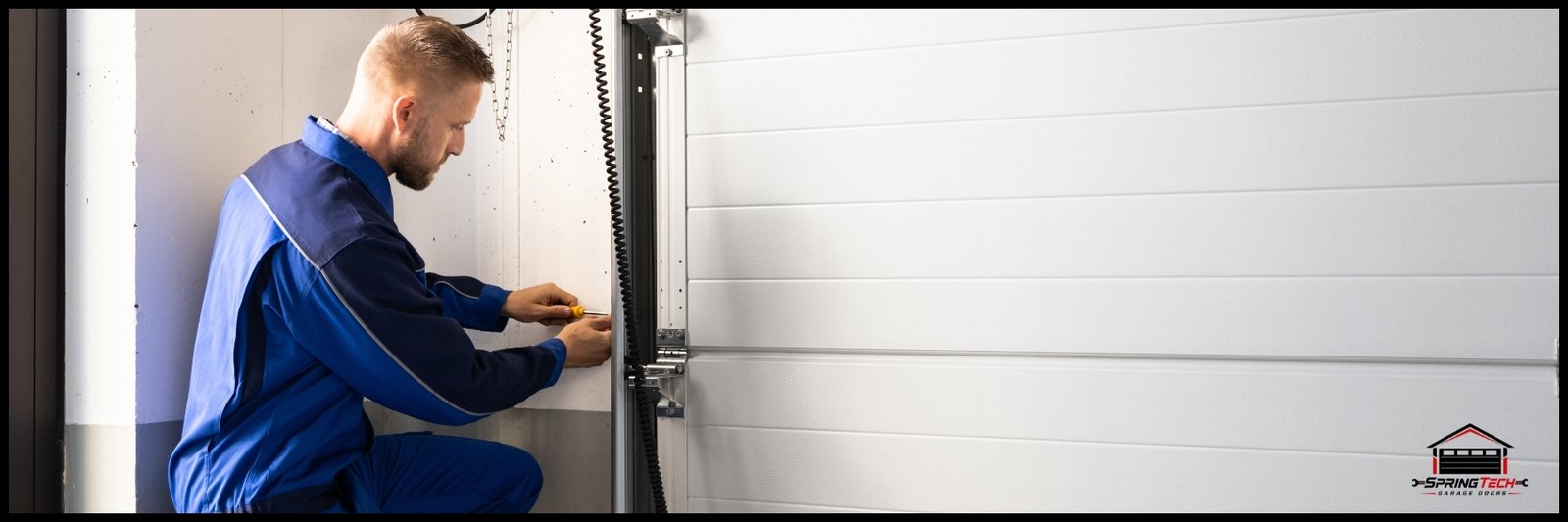
Your garage door is one of the hardest-working parts of your home. Most households use it three to five times a day, every day, through blistering summers, wet shoulder seasons, and the kind of winters that Simcoe County and York Region are known for. For example, Barrie averages 157 days a year when overnight temperatures drop to 0°C or below, and that kind of climate puts real stress on springs, cables, seals, and hardware that most homeowners rarely think about until something goes wrong.
The good news is that a little attention goes a long way. Regular maintenance keeps your garage door running quietly and reliably, extends the life of the entire system, and helps you catch small problems before they turn into expensive repairs. Here are 10 essential garage door maintenance tips to keep your system in top shape year-round.
1. Do a Monthly Visual Inspection
Start with your eyes. Once a month, take a few minutes to look at your garage door with the engine running. Watch it move through a full open and close cycle and look for anything that seems off, such as uneven movement, sections that appear to sag or bow, visible rust or corrosion on the springs or cables, and any gaps along the sides or bottom where the seals meet the frame.
Catching signs that your garage door needs repair early is almost always cheaper than waiting until it becomes a mechanical failure. Make it part of your routine the same way you would check your smoke detectors or change your furnace filter.
2. Listen for Changes in How It Sounds
A quiet garage door is a healthy garage door. If yours has started making grinding, squeaking, rattling, or banging sounds that were not there before, something has changed and it is worth investigating. Grinding typically points to worn rollers or insufficient lubrication. Squeaking often means dry hinges or springs. Rattling can indicate loose hardware.
Your garage door’s sound is one of its best diagnostic tools. Get familiar with what normal sounds like so that you notice when something changes.
3. Inspect and Tighten All Hardware
A garage door moves up and down hundreds of times a month. That repetitive motion gradually loosens bolts, brackets, roller mounts, and track fasteners. Every three to six months, go around the door with a socket wrench and check that everything is snug. Pay particular attention to the brackets that hold the track to the wall and ceiling, and the bolts that connect the track sections.
Do not overtighten — just firm enough that nothing moves when you give it a gentle tug. Loose hardware contributes to noise, uneven movement, and accelerated wear on surrounding components.
“One of the simplest things a homeowner can do is just walk around the door every few months with a wrench and tighten things up. It takes ten minutes and it makes a real difference. Most of the noisy doors I see on service calls have hardware that has worked itself loose over time. It is an easy thing to stay on top of.”
Ilan Kuchuk, Founder, Spring Tech Garage Doors
4. Lubricate Moving Parts Twice a Year
Lubrication is one of the highest-return maintenance tasks you can do, and it takes less than fifteen minutes. Apply a high-quality garage door lubricant (not WD-40, which is a solvent rather than a true lubricant) to the rollers, hinges, springs, and the bearing plates at the top of the door. A thin coat of lubricant on the torsion bar is also worthwhile.
In Central Ontario, timing matters. Lubricate in late October before the cold sets in, and again in April once the worst of winter has passed. Barrie’s January temperatures average a low of -10.4°C, and standard lubricants can thicken significantly in that kind of cold, reducing their effectiveness. Look for a lubricant rated for cold weather performance if you want reliable results through a Simcoe County winter.
Avoid lubricating the tracks themselves. The tracks should be clean and free of debris, but lubricant on the track surface can cause the rollers to slip rather than roll smoothly.
5. Test the Balance of Your Door
A garage door that is out of balance puts unnecessary strain on the opener motor and accelerates wear on the springs and cables. Testing the balance takes about thirty seconds. Disconnect the opener by pulling the red emergency release cord, then manually lift the door to about waist height and let go. A properly balanced door should stay in place or move only slightly. If it falls quickly or shoots upward, the spring tension needs to be adjusted.
Do not attempt to adjust the springs yourself. They are under significant tension and adjusting them incorrectly is one of the more common causes of serious garage door injuries. Call a technician to rebalance the system.
“The balance test is something I always recommend to homeowners because it gives you a clear signal that something needs attention before the opener starts struggling or a spring lets go. If the door will not stay put when you let go of it, the springs are not doing their job properly. In our climate, springs take a real beating through winter — the cold makes the metal more brittle and more prone to fatigue. Catching an imbalance early is much better than dealing with a snapped spring in January.”
Ilan Kuchuk, Founder, Spring Tech Garage Doors
6. Test the Auto-Reverse Safety Feature
The auto-reverse feature is a critical safety mechanism that causes the door to stop and reverse if it encounters an obstruction while closing. Test it every few months by placing a piece of wood flat on the ground in the path of the door and closing it. The door should reverse when it makes contact. If it does not, the force settings need to be adjusted and you should not use the door until they are.
Also test the photo-eye sensors on either side of the door frame by waving your hand through the beam while the door is closing. The door should reverse immediately. Clean the sensor lenses with a soft cloth if the sensors are triggering without cause, as dirt and condensation are common culprits, particularly through the wet shoulder seasons in our region.
7. Inspect and Replace Weatherstripping and Seals
The seals around your garage door (the rubber weatherstripping along the sides and top of the frame, and the bottom seal that sits flush with the floor) take a lot of abuse through a Central Ontario winter. Repeated freeze-thaw cycles cause rubber to crack and compress, and seals that looked fine in September can be letting in water and debris by March.
Check all four sides of the door frame at least once a year, ideally in the fall before temperatures drop. Look for cracks, gaps, sections that have pulled away from the frame, or a bottom seal that no longer sits flush with the floor. Replacing worn seals is one of the most cost-effective maintenance tasks you can do, and it keeps water, dirt, and pests out of your garage through the wettest and coldest months of the year.
8. Keep the Tracks Clean and Clear
The tracks on either side of your garage door guide the rollers and keep the door moving smoothly. Over time, dirt, grease buildup, and debris can accumulate in the tracks and cause the door to move unevenly or bind. Wipe the tracks down with a damp cloth every few months and remove any visible debris. In winter, check for ice buildup along the bottom of the track, which can prevent the door from closing fully and trigger the auto-reverse.
Do not use harsh chemical cleaners on the tracks, as these can damage the metal and degrade the rollers over time. A damp cloth is all you need for regular cleaning.
“Tracks are something people tend to overlook because they do not move — it is the rollers that move along them. But dirty or misaligned tracks are behind a lot of the rough or jerky movement I see on service calls. A quick wipe-down a couple of times a year makes a noticeable difference. And in winter, it is worth checking the bottom of the track for ice before you assume something mechanical is wrong.”
Ilan Kuchuk, Founder, Spring Tech Garage Doors
9. Inspect Springs and Cables Visually
Springs and cables are the two components under the most tension in your garage door system, and they are also the two that can cause the most damage if they fail suddenly. You should not attempt to repair or adjust them yourself, but you should inspect them visually on a regular basis.
For torsion springs, look for visible gaps in the coil, uneven coiling, or rust and corrosion forming on the surface. For cables, look for fraying, kinking, or any section of cable that appears to be unwinding from the drum. In Barrie and Orillia, big snowstorms of over 10cm occur roughly six times a year on average, and the repeated heavy use that comes with digging out after those events puts extra demand on springs and cables that are already being stressed by the cold. If anything looks off, call a technician before the next time you use the door.
10. Schedule an Annual Professional Tune-Up
Even if you stay on top of all of the above, there is no substitute for having a trained technician go through the entire system once a year. A professional tune-up covers everything a visual inspection might miss, including spring tension calibration, cable condition, opener force settings, roller wear, track alignment, and hardware integrity. All of this gives you a clear picture of what is in good shape and what is worth monitoring or replacing before it fails.
The best time to schedule a tune-up in Simcoe County and York Region is early fall, before temperatures drop and winter sets in. That way any issues are addressed before the cold puts additional stress on the system and you head into the hardest months of the year with a garage door you can count on.
Spring Tech Garage Doors offers professional annual tune-ups and maintenance services for homeowners across Barrie, Innisfil, Bradford, Newmarket, Richmond Hill, Nobleton, Angus, Alliston, Orillia, Tiny, and Wasaga Beach. If it has been a while since your door had a proper inspection, now is a good time to book one.